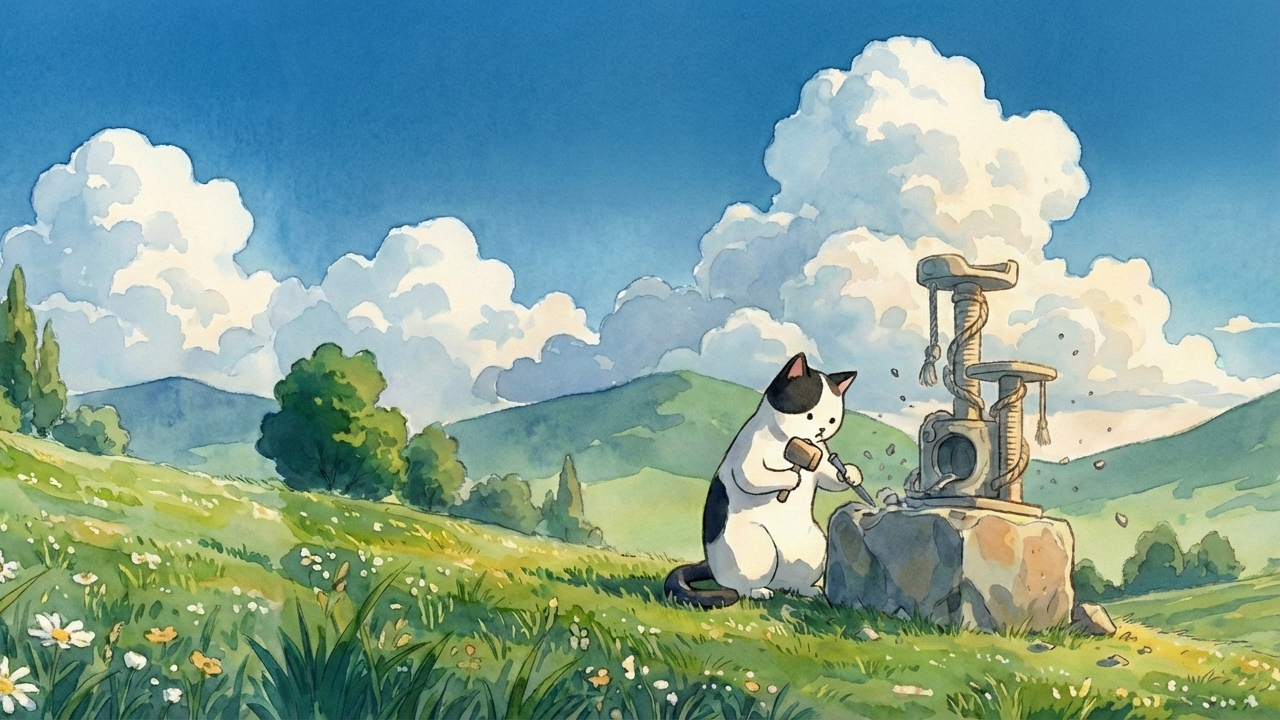
Taste is work
I built a notes app. There are thousands of notes apps. You could build and ship one with Claude Code in thirty minutes.
The app is called Scratch and it's a simple markdown notebook that does far less than most notes apps. So I was surprised when I woke up to hundreds of GitHub stars, thousands of visits to my website, and pull requests from people who cared enough to improve it.
As AI commoditizes some skills, one that's becoming more important than ever is taste (as others have noted). Taste is an imprecise word and it sounds like something you either have or you don't. But more than ever, I think taste can and should be actively developed.
What I mean by taste
Two skills working together: product definition and craft.
Product definition is seeing a real problem clearly and having a point of view about the right solution. Not the biggest or most comprehensive solution, but the right one. Craft is the accumulation of small decisions that make someone feel something when they use what you've built.
AI can help you execute faster than ever, but it can't tell you what's worth building or how to put care into building it (at least not yet).
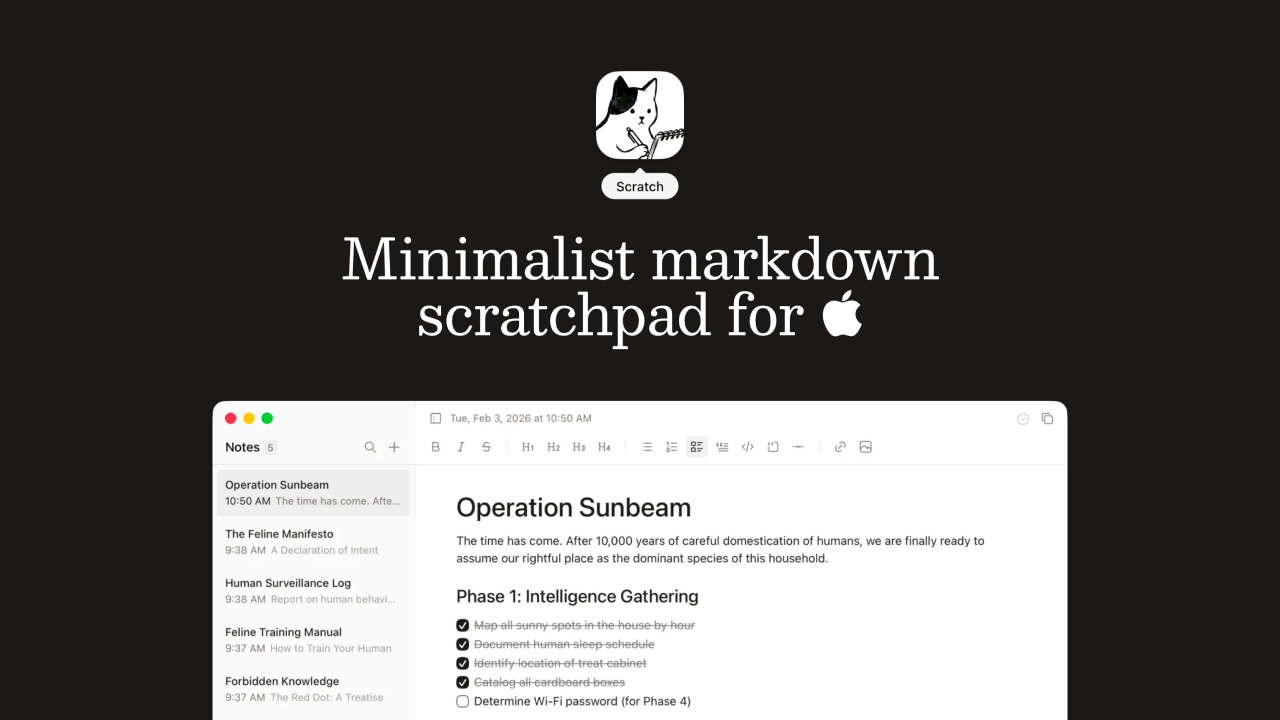
For Scratch, this meant starting with a specific purpose. I work with AI all day, and AI writes markdown. I also write a lot of throwaway notes, and I prefer doing this in a lightweight notepad with formatted text. But markdown-friendly apps are powerful and heavy, and lightweight editors don't support markdown. So I kept Scratch simple: a WYSIWYG notebook that's fast, local-first, and saves as markdown. No plugin system, no accounts, no built-in AI features.
The craft showed up in the details. Keyboard shortcuts for everything. A command palette so you rarely touch the mouse. Focus mode. A cat mascot that gives the app personality. None of these are strictly necessary, but they're what make Scratch feel like Scratch.
Taste needs to be practiced
Taste can be learned. Taste without work produces the same result as no taste.
I started my career as an investment banker, not a designer. I developed taste the same way you develop any skill: deliberately, by paying attention, and by putting in the reps.
Part of it is observation. Seek out well-designed software and study it. Pay attention to what other builders are doing and try to understand the principle behind what works. The best product decisions I've made came from noticing small things in apps I admire.
Part of it is doing the work. I use Scratch every day and test every feature (I used it to write this). I notice when something feels slow, when I reach for a shortcut that doesn't exist, when the UI creates friction I'd gotten used to. Building with AI makes it easy to ship a first version. The real work is testing, iterating, and thinking critically about every interaction. That cycle is where taste actually shows up in the product.
And part of it is filtering feedback. Build in public and talk to users. Understand what they're asking for and why. Then be thoughtful about which problems you solve. Not every feature request serves the core purpose of your app, and adding the wrong ones will dilute it.
Why this matters now
When building was hard, shipping working software was itself a competitive advantage. Product thinking and design craft were nice-to-haves.
AI inverted this. Building is table stakes. The thing that differentiates is knowing what to build, what to leave out, and caring enough to get the details right. This should be good news for designers, researchers, PMs, and anyone with clear opinions about how software should work. Your skills are the bottleneck now. And if you learn to build with AI, that bottleneck becomes an advantage.